Sixteen days into August, I’m eleven poetry books behind the mark for the Sealey Challenge. I’ve read only five. At this point, am I really a card-carrying participant?
Sure, I have a litany of excuses for those interested (I was traveling for five days; I’m a slow reader; things have been busy, etc., etc.). Still: it’s uncomfortable – like getting on a train with morning breath. Maybe nobody else notices, but the taste is unmissable.
31 poetry books in 31 days was always going to be a stretch. I joined partly because I wanted to test myself. What would I prioritize? How soon would despair kick in? I like to think, everything considered, I’ve done a decent job. Having even fifteen, or ten, new poetry books finished by August 31 is better than none at all.
Selection is harder than I expected. Books by legends and laureates are the most tempting, and likely the most rewarding, but they run long (80+ pages), and require hours of steadfast attention even for a cursory reading. By contrast, lesser-known / obscure / “minor poets” tend to run slim and read quick, to varying effect. This week – for example – I’ve put off Karl Shapiro and Robert Bly, knowing I’d never finish them in a calendar day in good conscience. And, groping around a bookshelf for the “fastest, easiest poet in sight,” I had to ask myself if this was even worth the time. The challenge seems to invite corner-cutting.
But Nicole Sealey isn’t playing the hall monitor; nobody’s being graded. The point is to read more poetry. With that in mind, here are some quick impressions of books I likely wouldn’t have read for a while otherwise:
August 1: Bestiary by Donika Kelly
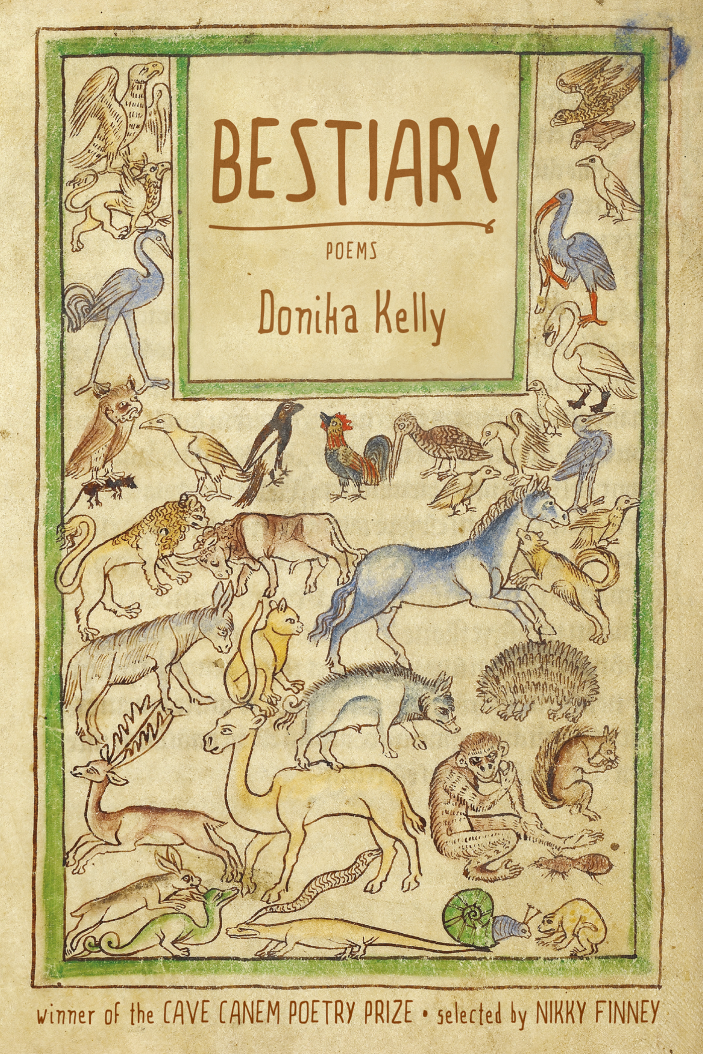
For some reason, in the 2010s, and particularly around the 2016 election, Respected PoetsTM embraced two particular fads:
- turning the present progressive tense into nouns (“the groaning,” “the sighing,” “the breathing,” “…in the shedding…in the molting…”), and
- focusing tractor-beams of attention on “the body.” Volumes upon volumes of poems centered on tongues, throats, ears, guts, etc.
Bestiary is sparing with the first of these, but fully embraces the second. Which is not necessarily a bad thing.
Its central conceit – a bestiary, naturally – actually gets washed into the background by other, far more potent themes. This is a book about trauma. Flip the book to its physical center, and you’ll find “How to be alone,” a sizeable (disturbing, and heartbreaking) suite that moves through the long fallout of a truly revolting evil.
For its size, this is a heavy book.
August 2: Voices of Lost Souls: Writings Under Divine Destiny by Malik Santiago

This was a mysterious purchase. I bought it from a street vendor after leafing through and seeing grainy iPhone screenshots sprinkled throughout. I could find very little evidence of its author online, and no information about the publisher. This was a bona fide independent release by an Amateur PoetTM.
I won’t say much more except that I was surprised and charmed at turns, and put off at others. A few “Zionist / reptilian blood sucker” references too many for my taste. There were kernels of interest elsewhere: the outlines of a pseudo-Rastafarian, cosmic, diasporic worldview, shaped by a manic and contradictory poetic voice.
August 8: Life & Death (Poems) by Robert Creeley

The first full book I’ve read by the Black Mountain poet. Some killer line breaks. Still processing.
August 13: Howl and Other Poems – Allen Ginsberg

As a college freshman, sitting down in Payson Library to read the title poem straight through, I was floored. That was the wild, expansive sort of poetry I wanted to write: poems full of angels and friends and cities, midnight journeys and heaven and hell and ecstasy. I was probably too swept up in new possibilities to take in how much despair is in this poem and the others in the collection.
Suffering came through more acutely this time around. My thoughts on Ginsberg as a poet have fluctuated pretty strongly in the past, but I was surprised by the freshness of his voice. As much as poets have played with and broken poetic form in the intervening decades, it’s still astounding to see Ginsberg’s inventiveness seventy years later.
August 14: Little Pieces of Poetry: Selected Poems 1998-2019 – Garrett Buhl Robinson

A pocket-sized collection by the “Poet in the Park,” Garrett Buhl Robinson. I didn’t have the fortune to meet him in person, but Manhattanites can find him selling his books near some major landmarks. Each poem in this volume is accompanied by some charming digital art – like with Malik Santiago, the visuals add an intriguing aesthetic flourish that likely wouldn’t have been possible even with a smaller commercial press.
 The Procrastinating Poet